

AFK Meaning: The Complete Guide to Understanding and Using AFK
Ever wondered what “AFK” means when someone types it in a chat. Or maybe you’ve seen teammates in games suddenly go silent, only to return saying “Sorry, I was AFK.” This simple three-letter acronym plays a crucial role in our digital conversations.
This complete guide will teach you everything about AFK – its meaning, origins, proper usage, and why it’s essential for online communication whether you’re gaming, chatting with friends, or working remotely.
What Does AFK Mean?
AFK stands for “Away From Keyboard.” It’s internet slang that tells others you’re temporarily stepping away from your computer or device and won’t be actively responding to messages or participating in activities.
The term isn’t pronounced as a word – you spell it out as A-F-K when saying it aloud.
Here’s what you need to know:
- Full Form: Away From Keyboard
- Purpose: Signal temporary unavailability
- Usage: Gaming, messaging, work chats
- Duration: Usually short-term absence
AFK is commonly used in real-time digital spaces like online games, chat rooms, and messaging platforms to let others know you’re stepping away but plan to return soon.
The Origin of AFK
AFK originated in the early 1990s during the rise of internet relay chat (IRC) and early online communities. It became popular as people needed a quick way to communicate their temporary absence.
How it started:
IRC Chatrooms: The earliest users typed “AFK” to inform others they were stepping away temporarily. This helped maintain conversation flow and prevented confusion.
Online Gaming: As multiplayer games like Ultima Online and EverQuest gained popularity, “AFK” became essential shorthand for players who needed breaks.
Messaging Platforms: With AOL Instant Messenger and MSN Messenger becoming mainstream, AFK spread beyond gaming into everyday digital communication.
The first recorded use of AFK dates back to 1991 in Usenet discussion archives, showing how long this term has been part of internet culture.
When and How to Use AFK

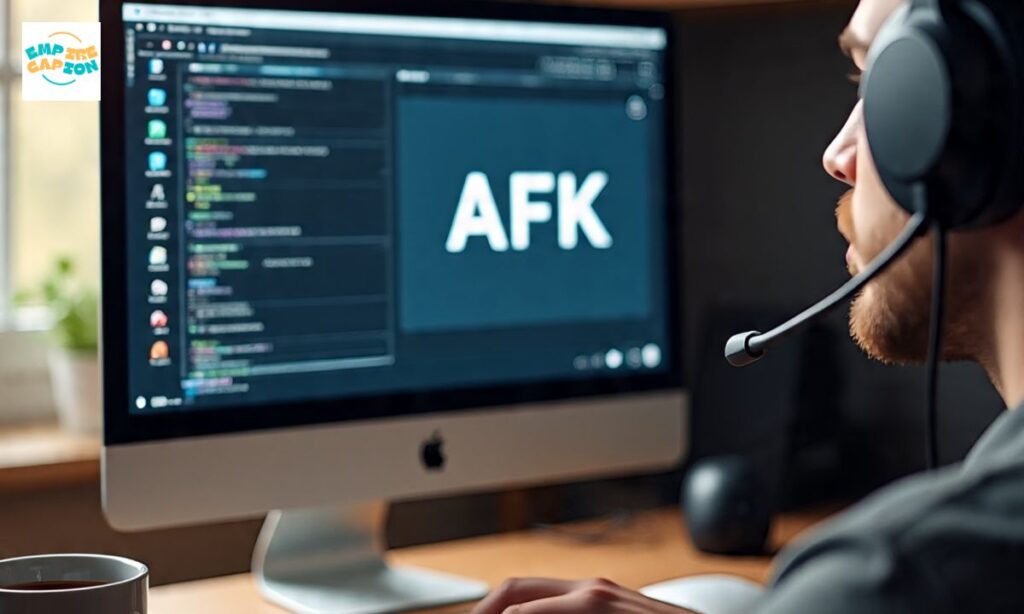
Understanding when to use AFK involves more than knowing its meaning – it’s about digital etiquette and clear communication with others online.
In Online Gaming
Games happen in real-time, so when players stop responding, it affects the entire team. Here’s how AFK appears in popular games:
League of Legends: “Our jungler has been AFK since minute 3” Fortnite: “Don’t revive him, he’s AFK right now”
World of Warcraft: “Going AFK for a quick bathroom break”
Many games have automatic systems that detect AFK players and may kick them or apply penalties for extended inactivity.
In Messaging Apps (WhatsApp, Telegram, Discord)
Common AFK messages include:
- “AFK for dinner, back in 30 minutes”
- “Going AFK briefly, message me if urgent”
- “AFK – walking the dog, be right back”
These messages help friends and family understand why you’re not responding immediately.
In Workplaces and Remote Teams
On professional platforms like Slack, Microsoft Teams, or Zoom:
- “AFK getting coffee – back in 10 minutes”
- “Away from keyboard for lunch, will check messages at 2 PM”
- “AFK for a quick call, available again in 15 minutes”
In work settings, it’s helpful to include an estimated return time so colleagues can plan accordingly.
Common Variants and Related Terms
Several similar abbreviations are used alongside or instead of AFK:
- BRB (Be Right Back): Implies a very short absence
- BBL (Be Back Later): Indicates a longer absence than BRB
- IDLE: Shows inactivity, often detected automatically by systems
- IRL (In Real Life): Refers to offline activities or situations
Example Scenario:
“Going AFK for 20 minutes, BRB after my meeting – don’t start the raid without me!”
This message combines AFK with BRB and provides specific timing, making communication clear and helpful.
Why AFK Matters in Digital Culture
In today’s world of instant messaging and constant connectivity, saying “AFK” serves as a polite way to set expectations about your availability.
Why it matters:
- Clear Communication: Prevents others from thinking you’re ignoring them when you don’t respond immediately.
- Respect for Others: Shows consideration for teammates, colleagues, or friends who might be waiting for your input.
- Reduces Frustration: Helps avoid misunderstandings that can occur when someone suddenly stops responding.
- Team Coordination: Essential in group activities like gaming or collaborative work projects.
- AFK isn’t just internet slang – it’s a valuable social signal that helps maintain positive relationships in virtual spaces.
Misunderstandings and Misuses of AFK
Even simple terms like AFK can be misused, leading to frustration or confusion.
Common Misuses:
- Saying AFK but not returning: This irritates teammates and colleagues who adjust their plans based on your message.
- Overusing in formal settings: Using AFK in serious business communications may appear unprofessional.
- Using AFK as an excuse: Some people abuse AFK to avoid responsibilities or difficult conversations.
- No time estimate: Saying just “AFK” without indicating when you’ll return leaves others guessing.
If you’ll be away for more than a few minutes, specify your return time or use “BBL” (Be Back Later) instead.
AFK in Pop Culture and Memes

Like many internet terms, AFK has entered popular culture and spawned countless memes and jokes.
Examples:
Streaming Platforms: Twitch and YouTube streamers often joke about “AFK moments” when they step away during live streams.
Social Media: Posts about being “AFK from life” or “spiritually AFK” have become humorous ways to express feeling disconnected.
Gaming Communities: Memes about teammates going AFK at crucial moments are extremely popular on Reddit and gaming forums.
Internet Culture: “AFK but emotionally present” and similar phrases have become running jokes about modern digital life.
These cultural references show how deeply embedded AFK has become in our online vocabulary.
Real-World Examples of AFK Usage
Here are authentic examples of how AFK appears in daily digital communication:
Gaming Chat Log
[Player1]: need to grab some food real quick
[Player2]: going afk too?
[Player1]: yeah afk 15 mins max
[Player3]: ok we’ll wait for you both
Slack Work Chat
💬 Sarah: AFK for lunch meeting – back by 2 PM
💬 Mike: Got it, I’ll handle the client call
💬 Sarah: Thanks! Will catch up on messages when I return
Discord Conversation
🎮 Alex: AFK walking my dog before the tournament
🎮 Jamie: No problem, we start in 30 anyway
🎮 Alex: Perfect timing then!
These examples show natural, everyday usage across different platforms and contexts.
Should You Use AFK in Professional Settings?
Whether AFK is appropriate at work depends largely on your company culture and the formality of the communication.
When it’s okay:
- Casual work environments where informal communication is normal and accepted.
- Team chats with close colleagues who understand gaming and internet terminology.
- Internal channels where brevity and quick communication are valued over formality.
- Tech companies where internet culture and gaming references are common.
When to avoid:
- Client communications where professionalism is essential for business relationships.
- Formal meetings or official documentation where clarity is more important than brevity.
- Conservative industries where traditional communication styles are expected.
- External partnerships where AFK might confuse or seem unprofessional.
Alternative Phrases:
- “Stepping away from my desk briefly”
- “Taking a quick break, back soon”
- “Away for a few minutes”
- “Out for lunch, returning at [time]”
AFK Across Cultures and Languages
One remarkable aspect of AFK is its universal recognition across different cultures and languages in digital spaces.
Global Usage:
English-Dominant: Most international gaming and chat communities use AFK regardless of their primary language.
Universal Understanding: Even in non-English speaking countries, AFK is widely recognized and understood.
Local Alternatives: While some languages have equivalent phrases, AFK often remains the preferred term.
Example:
French Gaming: Players use “AFK” instead of “absent du clavier” Japanese Chats: AFK appears frequently alongside Japanese text Spanish Communities: “AFK” is common even in Spanish-language gaming servers
This global adoption shows how internet culture transcends traditional language barriers.
AFK in Technology and Software

Modern technology has evolved to automatically detect and manage AFK behavior across various platforms.
Auto-Detect AFK Features
Many applications now recognize when users are inactive:
Discord: Automatically shows “Idle” status after a period of inactivity Gaming Platforms: Detect mouse and keyboard inactivity to identify AFK players
Work Software: Track activity for time management and productivity monitoring Streaming Services: Pause content when no user interaction is detected
Popular Software That Uses AFK Detection:
Time Tracking Apps: Toggl Track and Hubstaff monitor keyboard/mouse activity Competitive Games: League of Legends and Valorant have automated AFK penalty systems Communication Tools: Slack and Teams show activity status based on user engagement Streaming Platforms: Netflix and YouTube pause after periods of inactivity
These systems help maintain fair play in games and accurate tracking in work environments.
Frequently Asked Questions
Is using AFK considered rude?
Not when used appropriately. AFK is considered good internet etiquette as it informs others of your temporary absence.
Can you get banned for being AFK in games?
Yes, many competitive games have penalties for frequent AFK behavior, including warnings, temporary suspensions, or permanent bans.
Is AFK only used in gaming?
No, AFK is used across messaging apps, work communications, forums, social media, and any real-time digital platform.
How long should you be AFK before using the term?
Even a few minutes warrants an AFK message if others are waiting for you or if you’re in an active conversation.
Can AFK be used humorously?
Absolutely. Many people use phrases like “AFK from reality” or “spiritually AFK” as jokes about feeling disconnected or overwhelmed.
Final Thoughts
AFK might seem like a simple three-letter acronym, but it represents something much larger – the evolution of human communication in digital spaces. From its origins in early internet chat rooms to its current status as universally understood internet language, AFK demonstrates how online communities create and adopt communication tools.
Whether you’re a gamer coordinating with teammates, a remote worker managing availability, or someone chatting with friends, understanding and using AFK properly shows respect for others’ time and helps maintain smooth digital interactions.